


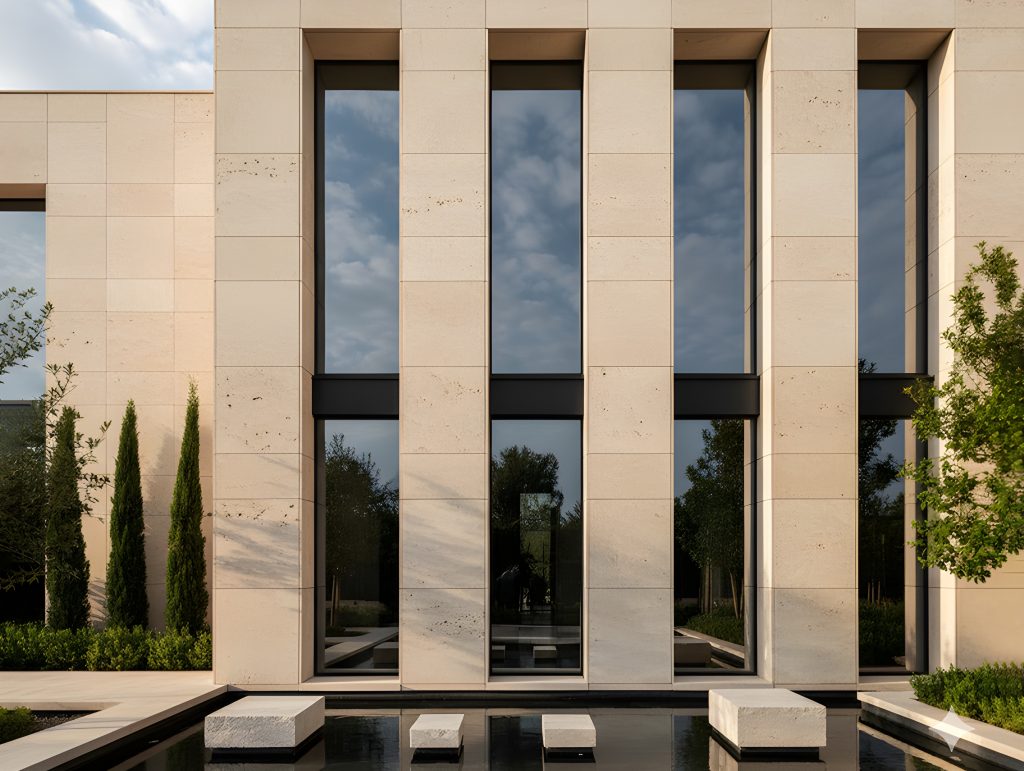
The architectural landscape of modern construction is continually evolving, with materials that combine aesthetics, durability, and sustainability becoming increasingly popular. Among these materials, natural stone travertine stone facade has gained significant attention for both residential and commercial projects. Travertine, a form of limestone deposited by mineral springs, especially hot springs, offers unique visual and functional benefits that make it an exceptional choice for building facades. In this article, we will explore the advantages of using travertine facades in detail, covering aspects from aesthetic appeal to environmental benefits, structural performance, and even cultural significance.
Timeless Aesthetic Appeal
One of the most compelling reasons architects and builders opt for a natural stone travertine stone facade is its timeless beauty. Travertine exhibits a wide range of natural colors, including cream, beige, gold, and even shades of brown and gray. These subtle variations create a visually rich surface that enhances the elegance of any building. Unlike synthetic materials that may fade over time, travertine maintains its natural luster, offering a façade that continues to look sophisticated for decades.
Moreover, travertine’s distinctive texture, characterized by its pitted holes and troughs, adds depth and character to exterior walls. When honed, brushed, or polished, the surface can present a smooth and refined finish suitable for modern minimalist designs, while a more natural finish complements classical or rustic architectural styles. This versatility makes travertine suitable for diverse projects, from luxury residences to commercial complexes and public buildings.
Travertine also interacts beautifully with natural light. Depending on the angle of sunlight, the façade can display subtle shifts in tone and texture, creating a dynamic and living appearance. This quality is particularly valuable in urban environments, where a building can visually stand out without appearing overly ornate. The stone’s natural veining and patterns also ensure that no two panels are identical, giving the façade a unique and bespoke look.
Durability and Longevity
Durability is a critical factor when selecting a material for building facades. Travertine is remarkably strong and resistant to weathering, which ensures the long-term integrity of a natural stone travertine stone facade. It can withstand extreme temperatures, UV radiation, and environmental pollution without losing its structural or aesthetic qualities.
Unlike other facade materials such as wood or certain composites, travertine does not warp, rot, or corrode, reducing maintenance costs over the building’s lifecycle. Its natural porosity also allows the stone to “breathe,” which helps in managing moisture and preventing structural damage caused by water infiltration. This inherent resilience makes travertine an ideal choice for buildings located in regions with harsh climates, including coastal areas exposed to salty air, desert environments with extreme heat, and cold regions with frost cycles.
Additionally, travertine is resistant to minor impacts and abrasions, making it suitable for high-traffic areas or commercial projects where durability is essential. Its structural strength means that once installed, a travertine façade can last for decades, if not centuries, without the need for significant repair or replacement.

Low Maintenance Requirements
Another notable benefit of a natural stone travertine stone facade is its low maintenance requirement. While some building materials need regular painting, sealing, or cleaning to maintain their appearance, travertine requires minimal upkeep. Periodic washing with water and a mild detergent is usually sufficient to keep the façade looking fresh.
Over time, travertine naturally develops a subtle patina that enhances its beauty. This aging process adds character to the façade rather than detracting from its appearance, making it particularly appealing for heritage-inspired or classical architecture. For property owners and facility managers, this translates to lower ongoing maintenance costs and less frequent need for restoration work.
Travertine also resists staining from environmental pollutants and organic debris. Unlike some natural stones that may discolor, travertine retains its neutral tone and texture even in urban areas with heavy air pollution. This combination of low maintenance and enduring beauty makes it a practical choice for both private and commercial projects.
Thermal Insulation Properties
Travertine offers excellent thermal insulation properties, contributing to energy efficiency in buildings. Its natural composition allows it to absorb and slowly release heat, helping to maintain stable interior temperatures. During hot weather, a travertine façade can reduce heat absorption, keeping indoor spaces cooler, while in colder seasons, it can retain warmth more effectively than many synthetic materials.
This thermal efficiency can translate into significant energy savings over time, reducing the need for extensive heating or cooling systems. In commercial buildings, where energy consumption is often substantial, a travertine façade can contribute to lower utility costs and a reduced environmental footprint. By choosing a natural stone travertine stone facade, architects can not only enhance the building’s aesthetic appeal but also promote environmentally conscious design practices.
Eco-Friendly and Sustainable Choice
Sustainability is an increasingly important consideration in modern architecture, and travertine excels in this regard. As a naturally occurring stone, it is eco-friendly, biodegradable, and can be sourced responsibly with minimal environmental impact. Unlike manufactured materials that rely on chemical processes, travertine production involves minimal energy consumption, reducing the building’s overall carbon footprint.
Travertine is also recyclable. Stone remnants and offcuts can be repurposed for landscaping, flooring, or other construction projects, contributing to a circular economy. Furthermore, travertine quarries can be managed to minimize environmental disruption, making it a responsible choice for architects and builders focused on sustainable design.
In addition to its environmental benefits, travertine has a lower embodied energy compared to synthetic materials, meaning that the energy required to extract, process, and transport the stone is considerably less. This characteristic makes travertine an excellent choice for projects aiming for green building certifications such as LEED or BREEAM.
Resistance to Fire and Environmental Hazards
Safety is another crucial advantage of using travertine for building facades. Travertine is naturally fire-resistant, which provides an additional layer of protection for structures against potential fire hazards. Unlike synthetic materials that may release toxic fumes when burned, travertine remains stable under high temperatures.
In addition to fire resistance, travertine exhibits strong resistance to environmental hazards such as mold, mildew, and insect infestations. Its mineral composition discourages the growth of harmful organisms, ensuring the façade remains structurally sound and hygienic over time. For residential buildings, this property contributes to healthier indoor air quality, while for commercial or public structures, it reduces the risk of structural deterioration caused by microbial activity.
Travertine is also resistant to chemical erosion. Acid rain, industrial pollutants, and other chemical contaminants have minimal effect on the stone, allowing façades to retain their appearance and structural integrity even in industrial or urban environments.
Versatility in Design Applications
The adaptability of natural stone travertine stone facade is one of its most attractive features for architects and designers. Travertine can be cut into tiles, slabs, or custom shapes, allowing for creative design solutions. Whether the goal is a sleek, modern look or a traditional, textured appearance, travertine can accommodate a wide range of architectural styles.
Travertine can also be combined with other materials, such as glass, metal, or wood, to create visually striking contrasts and highlight specific design elements. The variety of finishes, including polished, honed, brushed, and tumbled, further expands the possibilities, enabling unique and personalized building exteriors.
For large-scale projects, travertine panels can be prefabricated and mounted efficiently, reducing construction time while maintaining a high-quality finish. This versatility makes travertine suitable not only for facades but also for accents, columns, flooring, and outdoor landscaping elements, creating a cohesive aesthetic across the property.
Acoustic Insulation Benefits
In addition to thermal advantages, travertine provides notable acoustic insulation benefits. Its density helps reduce noise transmission from external sources, creating a quieter and more comfortable interior environment. This property is particularly valuable for buildings located in busy urban areas, where minimizing sound pollution is a priority.
For residential developments, reduced noise levels improve the quality of life for occupants, while in commercial or hospitality projects, better acoustic performance can enhance the experience for clients, customers, and employees. By incorporating a natural stone travertine stone facade, designers can achieve a balance between aesthetic appeal, structural performance, and acoustic comfort.
Value Addition and Market Appeal
Investing in a natural stone travertine stone facade adds significant value to a property. Travertine façades are often associated with luxury, elegance, and architectural sophistication, which can elevate a building’s market appeal. For commercial properties, an impressive exterior can attract high-profile tenants and clients, while residential buildings benefit from increased resale value and prestige.
The timeless nature of travertine ensures that the façade remains relevant and visually appealing for decades, making it a wise investment for long-term property value. Additionally, the low maintenance requirements and resilience of travertine reduce ongoing costs, making it a cost-effective investment in the long run.
Cultural and Historical Significance
Travertine has been used in construction for thousands of years, with famous examples such as the Colosseum in Rome demonstrating its durability and aesthetic appeal. By choosing a natural stone travertine stone facade, architects and builders are not only selecting a high-quality material but also connecting their projects to a rich historical and cultural legacy.
The use of travertine can evoke a sense of timelessness and prestige, enhancing the cultural value of modern architecture. This historical resonance can be especially important for public buildings, luxury residences, and heritage projects, where the façade plays a critical role in defining identity and status.

Conclusion
The advantages of using a natural stone travertine stone facade are extensive and multifaceted. From its timeless aesthetic appeal to its durability, low maintenance, thermal insulation, sustainability, fire resistance, versatility, acoustic benefits, value addition, and cultural significance, travertine offers a holistic solution for modern architectural needs.
In an era where building materials must meet both functional and environmental standards, travertine stands out as a natural choice that harmonizes beauty with performance. Whether for a luxury residence, a commercial building, or a public structure, incorporating travertine in the façade design ensures elegance, resilience, and long-lasting value. By choosing natural stone travertine stone facade, architects and builders not only create visually stunning exteriors but also embrace sustainable and practical construction solutions that benefit both occupants and the environment.
With its unmatched combination of aesthetics, durability, sustainability, and historical resonance, travertine continues to be a preferred material for architects and designers seeking to leave a lasting impression through their structures. Its enduring appeal and functional superiority make it an investment that pays off in beauty, performance, and environmental responsibility.
FAQ
A travertine stone facade refers to the exterior cladding of a building using travertine, a natural limestone formed by mineral springs. This natural stone is known for its distinctive porous texture, elegant color variations, and long-lasting durability. Travertine facades are widely used in residential, commercial, and public buildings due to their aesthetic appeal, structural strength, and ability to withstand harsh weather conditions.
Using travertine stone for facades offers numerous advantages, including:
Timeless aesthetic appeal with natural color variations.
High durability and resistance to weather, UV rays, and environmental pollution.
Low maintenance requirements.
Excellent thermal insulation properties, contributing to energy efficiency.
Fire resistance and protection against mold or insect damage.
Versatility in design and compatibility with other materials such as glass or metal.
Overall, travertine provides a combination of beauty, performance, and sustainability that makes it an ideal choice for modern architecture.
A natural stone travertine stone facade requires minimal maintenance. Regular cleaning with water and a mild detergent is usually enough to keep it looking fresh. Over time, travertine develops a natural patina that enhances its visual appeal rather than diminishing it. Unlike other materials, it does not require frequent sealing, painting, or chemical treatments. This low maintenance requirement makes travertine an excellent choice for long-lasting building facades.
Yes, travertine stone facades are suitable for a wide range of climates. Travertine is naturally resistant to heat, cold, UV radiation, and moisture, making it ideal for both hot and cold regions. Its porous structure allows it to “breathe,” preventing water damage and structural deterioration. Additionally, its fire resistance and durability make it a safe and reliable choice in various environmental conditions.