


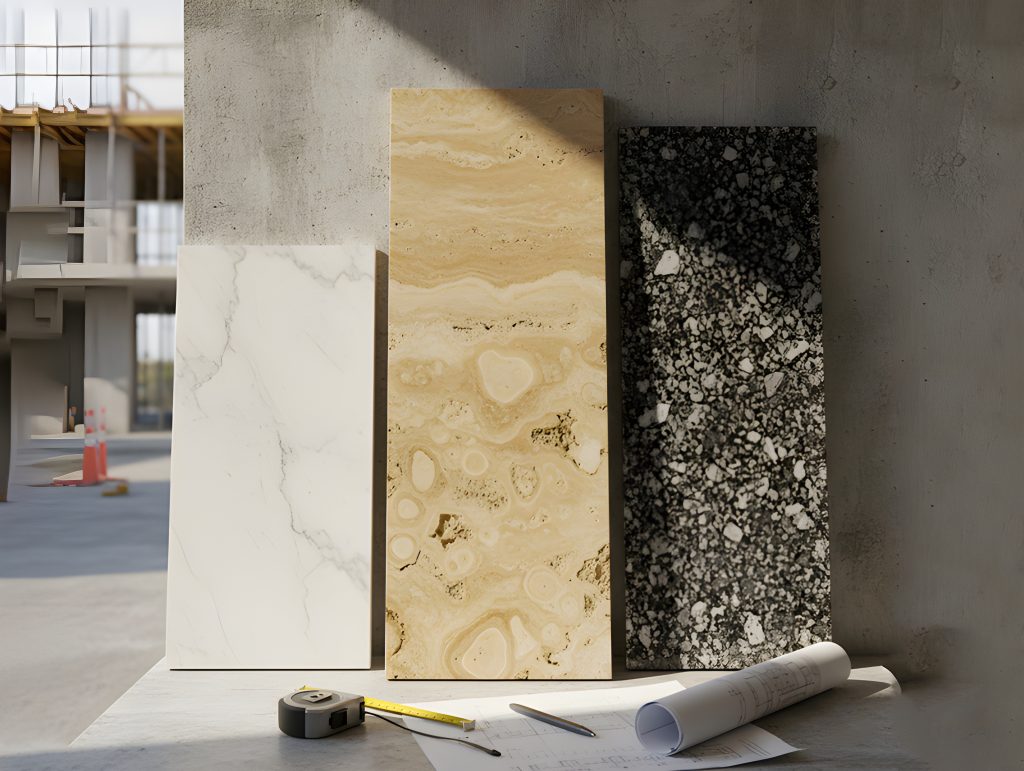
Natural stone has been one of the most enduring and versatile materials in human history. From ancient monuments to modern architectural masterpieces, stone continues to symbolize strength, luxury, and timeless beauty. However, choosing the right natural stone for construction requires more than just aesthetic preference — it involves understanding technical properties, performance characteristics, and suitability for specific applications.
Understanding the Nature of Natural Stone
Each natural stone is a unique geological formation created over millions of years under specific conditions of temperature, pressure, and mineral composition. These factors determine its hardness, porosity, color, and overall durability. The main types of stones used in construction include:
- Granite – Known for its high compressive strength, low porosity, and exceptional resistance to weathering, granite is ideal for both interior and exterior use.
- Marble – Valued for its luxurious appearance and veining patterns, marble is softer and more porous than granite, making it best suited for interiors, wall claddings, and decorative elements.
- Travertine – A sedimentary rock with natural pores and veins, travertine offers a warm and rustic look. It’s commonly used for façades, flooring, and bathrooms.
- Limestone – A softer stone, ideal for cladding and low-traffic flooring where elegance and natural tone matter more than extreme durability.
- Slate and Quartzite – These metamorphic stones are dense and non-slip, excellent for outdoor pavements and high-traffic areas.
Evaluating Technical Properties
Selecting the proper natural stone for construction starts with assessing its physical and mechanical properties. The following characteristics are essential:
- Compressive Strength: Indicates the stone’s ability to bear loads. Granite and quartzite have high compressive strength, making them suitable for structural and heavy-duty applications.
- Porosity and Water Absorption: Determines how easily the stone absorbs moisture. Low-porosity stones like granite are ideal for wet or exterior conditions.
- Abrasion Resistance: Important for flooring and high-traffic areas. Stones with higher resistance, such as granite and quartzite, maintain their finish longer.
- Flexural Strength: Crucial for thin slabs and wall claddings where bending stress may occur.
- Density and Specific Gravity: Reflect the compactness of the material; denser stones are usually more durable and less affected by environmental changes.
Proper testing — according to ASTM or EN standards — ensures that the selected stone meets construction and performance requirements.
Matching Stone to Application
Different architectural elements demand different stone characteristics. Here’s how to choose wisely:
- Exterior Facades: Require low-absorption stones with good weather resistance. Travertine, granite, and sandstone with appropriate sealers perform well.
- Flooring: Needs stones with high abrasion resistance and low porosity. Polished granite or honed marble are popular choices.
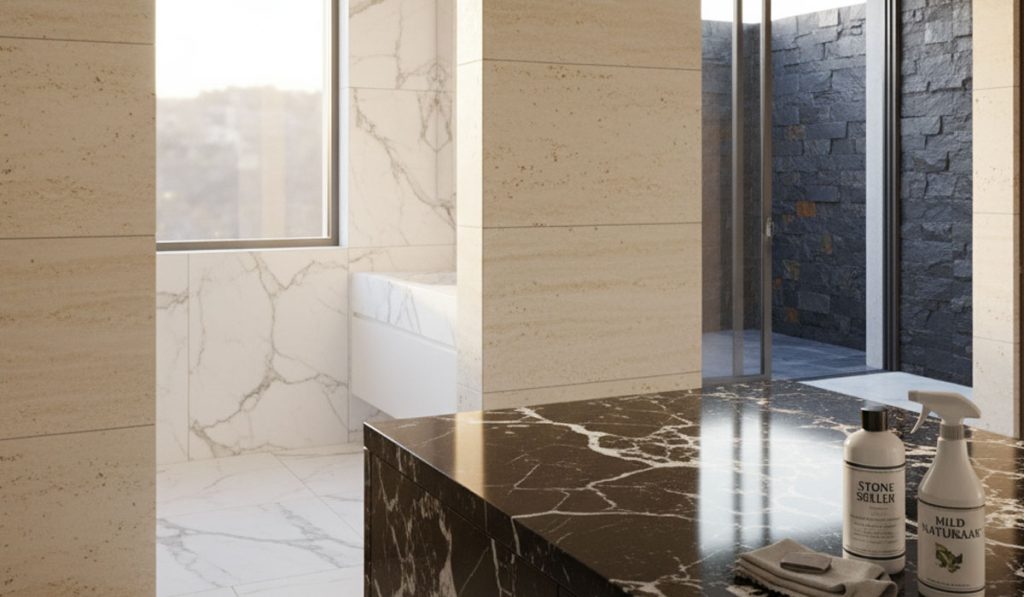
- Countertops and Vanities: Require dense, stain-resistant stones. Granite and quartzite are preferred for kitchens, while marble offers elegance for bathrooms.
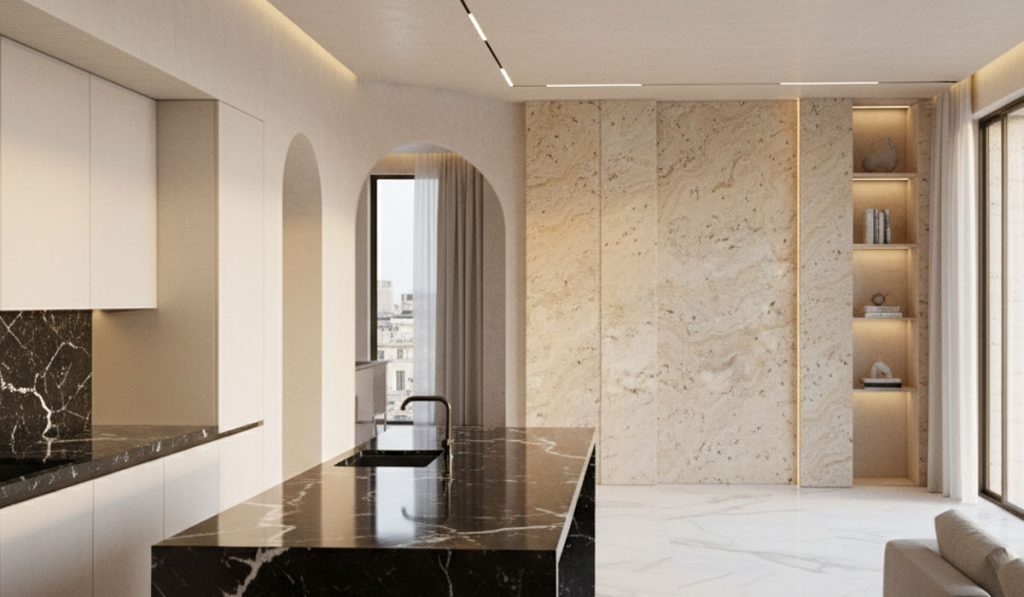
- Wall Cladding and Decorative Panels: Lighter stones such as limestone, marble, or travertine are commonly used due to easier installation and visual appeal.
- Outdoor Paving: Demands non-slip, frost-resistant stones like slate, quartzite, or flamed granite.
Each application must balance beauty, functionality, and maintenance requirements.
Finishes and Aesthetic Considerations
The surface finish of natural stone not only influences its appearance but also its performance. Common finishes include:
- Polished: Reflective and elegant; enhances color and veining, but may be slippery when wet.
- Honed: Smooth but non-reflective; ideal for contemporary interiors.
- Brushed or Leathered: Adds texture and character; hides minor scratches.
- Flamed or Bush-Hammered: Provides a rough, slip-resistant surface for exterior use.
- Tumbled: Creates a rustic, aged look perfect for classic designs.
When choosing a natural stone for construction, designers often combine different finishes to create depth and contrast within a single project.
Color, Veining, and Pattern Selection
Natural stone’s beauty lies in its uniqueness — no two slabs are exactly alike. The mineral composition affects its color and veining:
- Iron oxides give reddish or brown tones.
- Carbon impurities result in gray or black hues.
- Quartz and calcite create lighter shades like white or cream.
When selecting stone, architects should inspect full slabs rather than small samples to appreciate the real pattern variations. This ensures consistency and harmony in the final installation.
Maintenance and Longevity
Durability doesn’t mean zero maintenance. Even the hardest stone can lose its shine or absorb stains if neglected. Essential maintenance steps include:
- Sealing: Regular sealing minimizes water absorption and staining.
- Cleaning: Use pH-neutral cleaners instead of acidic substances like vinegar or bleach.
- Polishing and Restoration: Periodic professional polishing revives surface gloss and removes scratches.
Proper care ensures that the chosen natural stone for construction retains its elegance and structural integrity for decades.
Sustainability and Ethical Sourcing
Modern architecture emphasizes sustainability, and stone, being a natural material, aligns well with eco-friendly principles — if responsibly sourced.
Reputable quarries follow environmental management systems, minimizing waste and reducing energy use during extraction and processing.
Additionally, local sourcing lowers transportation emissions, while durable stones reduce the need for frequent replacement, further supporting sustainable design.
Cost vs. Value Considerations
While natural stone can be more expensive initially than artificial materials, its long-term value is unmatched. It adds real estate value, requires less replacement, and provides a timeless aesthetic that never goes out of style.
Budget-conscious projects can explore alternative finishes, local stones, or thinner slabs to balance cost without compromising on quality.
Conclusion
Choosing the right natural stone for construction is both a technical and artistic decision. It requires understanding geological origins, evaluating mechanical strength, and considering aesthetics, sustainability, and maintenance.
When selected wisely, natural stone transforms ordinary structures into architectural statements — embodying nature’s strength, elegance, and permanence in every project.